
NOTE: The content below expresses the views of the individual named as the author and does not necessarily reflect the position of the WRF as a whole.

A Review offered by Samuel T. Logan Jr., Ph.D.: Matthew V. Everhard, A Theology of Joy: Jonathan Edwards and Eternal Happiness in the Holy Trinity. Middletown, DE: JESociety Press, 2018. Pp. 235 $18.00, paper.
Is God angry with me? Or does God love me? Which is it?
Good and fair questions, often asked by many of us – sometimes publicly, often privately.
Add a comment
In December 2017, Christianity Today, published an article, “Today’s Evangelicals Face a Crisis of Confidence,” by Nathan Betts. One of the theses of this article was that “individual religiousness tends to be private and episodically intense.”
Add a comment
How should churches respond to its members who identify as same-sex attracted, yet are intentionally remaining celibate? Should they be celebrated for their chastity? Taught to repent of these illicit desires? The confessional Reformed world over the past 15 years has with one voice affirmed that sex is reserved for the bounds of marriage, a divine institution which is to be exclusively between men and women. However, there remains disagreement in both theology and pastoral practice in how to address those who claim a same-sex attracted identity while remaining celibate.
Add a comment
[Editor´s Note: This item is posted on the website of the WRF because its author is an individual member of the WRF and because the item will have considerable relevance to our many members in Australia and, indeed, to ALL of our members in various denominations around the world.]
Readers of The Australian may be puzzled by the announcement of a new Anglican Diocese of the Southern Cross. Claims of schism in the Anglican Church of Australia and even the absurd claim that the new Diocese is a cult, by one retired bishop, have only exacerbated the confusion.
Add a comment
For many people the mere mention of Sri Lanka, formerly known as Ceylon, brings with it a rather bleak picture of a situation gone out of control. Many will dismiss Sri Lanka as a debt ridden, badly governed, poverty stricken country controlled by one family who, until recently, held key positions in government and wielded their power for their own gain. This is all true, and there is little that can be done when a majority representation in government has its way.
Add a comment
Add a commentFrom Editor: This article by Dr. Risimati S. Hobyane (South Africa) is a chapter in the upcoming WRF/WEA book on The Decalogue and is posted here in its entirety. Rev. Hobyane argues for the currency of the Decalogue in the modern world. In the course of his argument he looks at the role of the Decalogue in the New Testament, its relationship with the work of Christ and how it is treated in selected Reformed confessions.
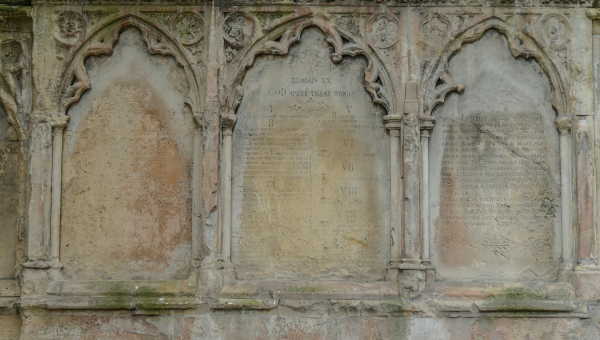
From Editor: This article by Dr. Glenn N. Davies (Australia) is a chapter in the upcoming WRF/WEA book on The Decalogue and is posted here in its entirety. Rev. Davies challenges believers understand the importance of "the continuing application of the Decalogue in the life of the believer." He calls upon all Christians to repeat with the psalmist: "If your law had not been my delight, I would have perished in my affliction. I will never forget your precepts, for by them you have given me life. (Psalm 119:92-93)"
Add a comment
From Editor: This article by Dr. Thomas Schirrmacher (Germany) is a chapter in the upcoming WRF/WEA book on The Decalogue and is posted here in its entirety. Dr. Schirrmacher argues for the importance of understanding that the "Bible does not give us God’s commandments in a unilinear fashion; the Bible gives us God’s commands through a spectrum which runs from foundational statements to case examples."
Add a comment
From Editor: This article by Dr. Thomas K. Johnson (United States and Czech Republic) is an introductory chapter in the upcoming WRF/WEA book on The Decalogue and is posted here in its entirety. Dr. Thomas invites "you, as disciples and students who belong to Jesus, to join in the process of lifelong learning from our covenant God. Blessed are those who meditate on God’s law!"
Add a comment
From Editor: This article by Dr. Thomas K. Johnson (United States and Czech Republic) is a chapter in the upcoming WRF/WEA book on The Decalogue and is posted here in its entirety. Dr. Thomas challenges believers not to look upon God's law with the terrible feeling of those who "only know its condemning use", but to understand that "once we really know God's grace, we can see what a treasure God's law is... We can say with the psalmist, 'Oh, how I love your law' (Psalm 119:97)."
Add a comment
From Editor: This article by Professor Pierre Berthoud (France) is a chapter in the upcoming WRF/WEA book on The Decalogue and is posted here in its entirety. In the chapter, Prof. Berthoud offers a very important reflection about the nature and origin of the Commandments. He masterfully shows how they are "an amazing and challenging invitation to reconsider and practice, within a dismantled and broken world that has lost its bearings, the “law of Christ” as fully manifested and accomplished in Jesus of Nazareth!"
Add a comment
Christians worldwide may be hearing confusing news about abortion in the United States after the US Supreme Court decision on June 24, 2022, Dobbs v. Jackson Women’s Health.[1] As a civil rights attorney and previous adoption lawyer, I can summarize this consequential ruling. Then I will suggest some ways forward for Christians, both in the U.S. and elsewhere.
Add a comment